

How Much Weight Loss to Reverse Type 2 Diabetes?


If you are asking how much weight loss to reverse type 2 diabetes, you are really asking a bigger question: how much change does your body need before blood sugar starts working better again? For many people, the answer is less extreme than they fear - but it still takes real commitment.
Type 2 diabetes does not improve from wishful thinking or one perfect week of eating. It tends to improve when you consistently lower the pressure on your metabolism through weight loss, better food choices, more movement, and less fat stored around the liver and pancreas. That is where remission can begin.
What you\'ll find in this article?
- How much weight loss to reverse type 2 diabetes?
- What “reverse” really means
- Why weight loss helps so much
- Is 5% weight loss enough?
- The people most likely to reach remission
- How to lose enough weight to change blood sugar
- A realistic timeline
- How much weight loss to reverse type 2 diabetes if you are not very overweight?
- What to watch besides the scale
- A smart safety note
- The bottom line on remission and hope
How much weight loss to reverse type 2 diabetes?
For many adults with type 2 diabetes, losing around 10% to 15% of body weight can lead to major improvements in blood sugar, and in some cases, remission. That means if someone weighs 220 pounds, a loss of 22 to 33 pounds may be enough to shift their metabolism in a meaningful way.
That said, there is no single magic number that works for everyone. Some people see fasting blood sugar improve after losing just 5% to 10% of body weight. Others need to lose more before insulin sensitivity and pancreatic function improve enough to bring glucose into a non-diabetic range.
A lot depends on how long you have had diabetes, how much excess weight you carry, where that weight is stored, your age, activity level, and whether your pancreas can still make enough insulin. People who act earlier often have a better chance of seeing stronger results.

What “reverse” really means
This is where many articles get sloppy. Type 2 diabetes is usually considered reversed when it goes into remission, not when it is permanently gone forever.
Remission generally means your blood sugar returns to a non-diabetic range for a sustained period without diabetes medication, or with much less medication depending on how your doctor defines it. Your A1C may fall below the diabetes threshold, and your fasting glucose may normalize. But the tendency toward high blood sugar can still come back if weight returns, eating habits slide, or physical activity drops.
That is not bad news. It is actually empowering. It means your daily choices can make a measurable difference.
Why weight loss helps so much
Weight loss matters because type 2 diabetes is closely tied to insulin resistance and excess fat storage, especially around the liver and pancreas. When those organs become overloaded, the body struggles to regulate blood sugar properly.
As body weight drops, liver fat often falls first. That can improve insulin sensitivity and reduce the amount of glucose the liver releases into the bloodstream. With more weight loss, pancreatic function may also improve, which can help the body respond better to meals.

This is why even moderate weight loss can have outsized benefits. The goal is not just to weigh less. The goal is to make your metabolism work better.
Is 5% weight loss enough?
Sometimes, yes. Losing 5% of body weight can improve fasting glucose, reduce insulin resistance, lower blood pressure, and improve triglycerides. For a 200-pound person, that is 10 pounds. That may not sound dramatic, but metabolically it can be a strong first step.
Still, 5% is often the beginning rather than the finish line if your goal is remission. Many people need closer to 10% or more to see deeper blood sugar improvements. If you have prediabetes, 5% to 7% weight loss can be especially powerful and may help stop progression before full diabetes takes hold.
So if your number feels far away, do not make the mistake of thinking smaller progress does not count. It does.
The people most likely to reach remission
Weight loss does not affect everyone the same way. People are generally more likely to put type 2 diabetes into remission if they were diagnosed recently, have not used insulin for a long time, still produce a reasonable amount of insulin, and can achieve meaningful weight loss relatively early.
That does not mean longer-term diabetes cannot improve. It absolutely can. Better blood sugar, lower medication needs, more stable energy, and lower complication risk are all worthwhile wins, even if full remission does not happen.
This matters because many people think in all-or-nothing terms. If they cannot promise complete reversal, they lose motivation. That is the wrong frame. Every pound lost and every blood sugar improvement matters.
How to lose enough weight to change blood sugar
The most effective approach is usually not a trendy diet. It is a plan you can keep doing long enough for your body to respond.
Start with food. Many adults with type 2 diabetes do well by cutting back on refined carbs, sugary drinks, desserts, white bread, and oversized portions. Build meals around protein, non-starchy vegetables, high-fiber carbs in sensible portions, and healthy fats that help with fullness. A simpler plate often works better than a complicated rulebook.
Calorie intake still matters, even when carb quality improves. You can eat healthy foods and still stall if portions stay too large. That is why people often do better when they track meals for a while, pay attention to liquid calories, and notice the habits that lead to evening overeating.
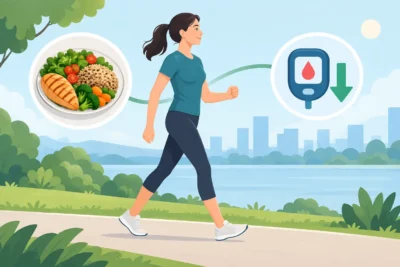
Movement helps in a different but equally important way. Walking after meals, strength training a few times per week, and staying active during the day can all improve insulin sensitivity. Exercise does not have to be extreme. It has to be consistent.
Sleep and stress also play a bigger role than most people expect. Poor sleep can raise hunger hormones and make blood sugar harder to control. Ongoing stress can do the same. If your routine is chaotic, fixing that may support weight loss more than chasing another supplement.
A realistic timeline
Most people do better with steady progress than rapid extremes. Losing 1 to 2 pounds per week is a reasonable pace for many adults. At that rate, a 20- to 30-pound loss can happen over several months, which is fast enough to improve health but slow enough to be sustainable.
Some people choose a medically supervised low-calorie program and see faster changes. That can work, especially early after diagnosis, but it is not the only path. The main question is whether you can maintain the habits that got you there.
Quick results are exciting. Staying there is what changes your future.
How much weight loss to reverse type 2 diabetes if you are not very overweight?
This is one of the most overlooked questions. Not everyone with type 2 diabetes has obesity, and even people who are only modestly overweight can carry excess fat in the liver or pancreas. In those cases, smaller amounts of weight loss may still help.
If you are not significantly overweight, the focus may shift slightly away from the scale and more toward food quality, muscle building, waist size, blood sugar trends, and reducing visceral fat. You may not need a dramatic transformation to improve metabolic health, but you still need targeted changes.
What to watch besides the scale
Weight matters, but it is not the only sign that your body is healing. Pay attention to fasting glucose, post-meal readings, A1C, waist circumference, energy levels, cravings, and whether you need fewer medications over time.
Sometimes the scale moves slowly while blood sugar improves quickly. Other times weight drops first and glucose takes longer to catch up. Both patterns can happen.
That is why patience matters. Your body is not a calculator.
A smart safety note
If you take insulin or blood-sugar-lowering medication, do not try to force major diet changes on your own without medical guidance. As weight loss and carb reduction improve blood sugar, medication needs can change. What worked before may become too much.
This is especially true if you start seeing lower readings, feel shaky, or notice signs of hypoglycemia. Lifestyle change is powerful, but it needs to be handled safely.
The bottom line on remission and hope
For many people, losing about 10% to 15% of body weight gives the best chance of putting type 2 diabetes into remission, while even 5% can produce real health benefits. The exact number depends on your body, your history, and how early you take action.
What matters most is not chasing a perfect number. It is creating enough metabolic change that your blood sugar no longer stays stuck in the danger zone. That can start with the next meal, the next walk, and the next pound lost. If you stay consistent, your body may respond better than you think.
Important notice: The content of Diabetes Cure Now is solely educational and informational and does not replace the evaluation, diagnosis, or treatment of a doctor or health professional. Before making changes to your diet, exercise, or medication, consult with a qualified professional..
Content reviewed for educational purposes and based on public medical sources.
Sources consulted
- American Diabetes Association (ADA)
- Mayo Clinic
- CDC
- NIH
12 Diabetic Recipes That Keep Meals Balanced
Diabetic Kidney Health Guide for Daily Protection
How to Start Walking With Diabetes Safely

10 Healthy Soups for Diabetics That Satisfy
Do Chia Seeds for Blood Sugar Really Help?

How to Reduce Dawn Phenomenon Naturally
Is Fruit Safe for Diabetes? What to Know
How to Walk After Meals for Better Blood Sugar