
How to Lower Fasting Blood Sugar Naturally


If your blood sugar looks decent during the day but creeps up first thing in the morning, you are not imagining it. Many people searching for how to lower fasting blood sugar are dealing with one stubborn number that refuses to cooperate, even when they are trying to eat better. That morning reading matters because it often reflects what your body is doing overnight, and it can be an early sign that insulin resistance is still active.
Fasting blood sugar is typically measured after not eating for at least eight hours. For many adults with prediabetes or Type 2 diabetes, the frustrating part is that bedtime numbers may look reasonable, then the morning number comes back higher than expected. This can happen because your liver releases stored glucose overnight, especially if your body is resistant to insulin. Stress hormones, poor sleep, late-night eating, and certain medications can also push morning glucose up.
What you\'ll find in this article?
- How to lower fasting blood sugar starts the night before
- The biggest lifestyle habits that improve morning glucose
- What to eat if your fasting blood sugar is high
- Why fasting blood sugar can rise even if you do everything right
- When weight loss helps and when the focus should be broader
- When to talk to your doctor
How to lower fasting blood sugar starts the night before
A high fasting reading is often built by habits that happen in the evening, not just what you do after waking up. That is why the most effective approach usually starts with dinner timing, food choices, and your overnight routine.
If you eat a large dinner heavy in refined carbs, your blood sugar may stay elevated for hours. If you snack late at night, especially on sweets, chips, cereal, or bread-based foods, your body may still be processing that glucose while you sleep. For some people, even healthy carbs in large portions can keep fasting numbers up if insulin resistance is significant.
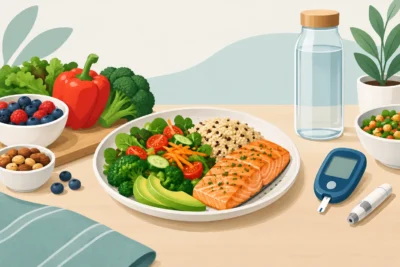
A better evening meal usually includes protein, non-starchy vegetables, and a moderate amount of slow-digesting carbohydrates. Think grilled chicken with broccoli and a small serving of quinoa, or salmon with salad and roasted vegetables. The goal is not zero carbs for everyone. The goal is a meal that does not send glucose soaring and stays satisfying enough to reduce late-night snacking.

Timing matters too. Many people do better when dinner is finished at least three hours before bed. That gives blood sugar more time to settle before sleep. It also improves digestion and may help sleep quality, which affects morning glucose more than most people realize.
The biggest lifestyle habits that improve morning glucose
If you want to know how to lower fasting blood sugar in a lasting way, focus on the habits that improve insulin sensitivity over time. Quick fixes may lower one reading. Better metabolic health lowers the pattern.
Walk after dinner
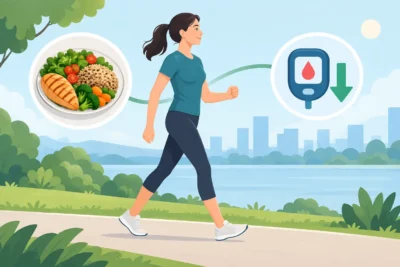
A short walk after your evening meal can make a real difference. You do not need an intense workout. Even 10 to 20 minutes of steady walking helps your muscles use glucose instead of letting it linger in the bloodstream. This is one of the simplest habits to test because it is low cost, low stress, and easy to repeat.
Eat enough protein and fiber during the day
People who undereat earlier in the day sometimes end up overeating at night. That pattern can worsen fasting glucose. Balanced meals with protein, healthy fats, and fiber help control hunger and reduce blood sugar swings. Eggs, Greek yogurt, cottage cheese, fish, lean meats, beans, chia seeds, and vegetables can all help support steadier glucose.
Fiber deserves special attention because it slows digestion and improves how the body handles carbohydrates. Non-starchy vegetables, nuts, seeds, legumes, and some lower-sugar fruits can be especially useful.

Improve sleep quality
Poor sleep raises stress hormones like cortisol, and cortisol can raise blood sugar. If you sleep badly, wake often, or get fewer than seven hours most nights, that could be contributing to high fasting numbers. Sleep apnea is another major issue, especially in people who are overweight or who snore loudly. It often goes undiagnosed and can make blood sugar harder to control.
Try to keep a regular sleep schedule, reduce screen time before bed, keep your bedroom cool and dark, and avoid heavy meals or alcohol late at night. These sound basic, but they can produce measurable changes.
Lower stress load
Your body does not separate emotional stress from physical stress very well. If you are under chronic pressure, your body may pump out more glucose as part of its fight-or-flight response. That is useful in an emergency, but not when you are trying to wake up with better numbers.
Stress reduction does not have to mean meditation for an hour. It can be as simple as a 10-minute breathing session, prayer, stretching, journaling, or a quiet walk. The best strategy is the one you will actually do consistently.
What to eat if your fasting blood sugar is high
There is no single perfect diabetes diet, but some foods make fasting glucose easier to manage. Meals built around protein, fiber, and whole foods tend to work better than meals based on processed starch and sugar.
For breakfast, many people do better with eggs, unsweetened Greek yogurt, a protein smoothie with no added sugar, or cottage cheese with nuts than with toast, muffins, cereal, or fruit juice. If your fasting number is already high in the morning, starting the day with a high-carb breakfast can keep the cycle going.
At lunch and dinner, build your plate around a protein source and vegetables first. Add carbs intentionally instead of automatically. That might mean half a sweet potato instead of a large baked potato, or a small serving of brown rice instead of a large bowl of white rice. Some people need tighter carb control than others. That part depends on how insulin resistant you are, your activity level, and how your meter responds.
Sugary drinks are one of the worst offenders. Soda, sweet tea, juice, and many coffee drinks can spike blood sugar fast. Replacing them with water, sparkling water, or unsweetened drinks is one of the quickest wins.
Why fasting blood sugar can rise even if you do everything right
This is where a lot of people get discouraged. You clean up your diet, stop dessert, walk after dinner, and your fasting number is still high. That does not always mean your efforts are failing.
One common reason is the dawn phenomenon. In the early morning hours, your body releases hormones that help you wake up. Those hormones can tell the liver to release glucose. If insulin is not working efficiently, that extra glucose stays in the blood. This is very common in prediabetes and Type 2 diabetes.
Another possibility is that your blood sugar is dropping too low overnight, and your body responds by releasing glucose. This is more likely in people using glucose-lowering medications or insulin, but it can happen in other situations too. The only way to know the difference is to track patterns, sometimes including a middle-of-the-night reading if your healthcare provider recommends it.
That is why context matters more than a single number. Look at your weekly pattern, your food, your sleep, your evening routine, and your stress level before deciding something is not working.
When weight loss helps and when the focus should be broader
For many adults, excess abdominal fat is closely tied to insulin resistance. Losing even 5 to 10 percent of body weight can improve fasting glucose significantly. That is not a cosmetic issue. It is a metabolic one.
Still, weight loss is not the only lever. Some people improve fasting blood sugar before the scale changes much, simply by reducing refined carbs, walking more, sleeping better, and building muscle. Strength training is especially helpful because muscle tissue uses glucose efficiently. Two to three sessions per week can support better blood sugar control, even if progress is gradual.
The trade-off is that aggressive dieting can backfire. If you slash calories too hard, your stress hormones may rise, your sleep may worsen, and your routine may become impossible to maintain. Slow, repeatable change often works better than an extreme reset.
When to talk to your doctor
Natural strategies can be powerful, but they are not a substitute for medical care when blood sugar is consistently high. If your fasting readings are regularly elevated, if your A1C is rising, or if you have symptoms like increased thirst, frequent urination, blurry vision, or unusual fatigue, it is time to get evaluated.
Medication decisions are personal, and many people want to improve blood sugar with lifestyle first. That is a reasonable goal for many adults, but it works best when it is guided by real data. Home glucose readings, A1C testing, and professional input can help you avoid guessing.
If you are taking diabetes medication, do not make major changes to food, supplements, or exercise without checking how that may affect your blood sugar. What lowers glucose naturally can sometimes lower it too much when combined with medication.
At Diabetes Cure Now, the most practical path is usually the one people can stick with: eat earlier at night, cut back on sugar and refined carbs, walk after dinner, sleep better, and stay consistent long enough to see the trend shift. Your fasting blood sugar is not just a random number. It is feedback. And if you listen to it carefully, it can point you toward the exact habits your body needs next.
Important notice: The content of Diabetes Cure Now is solely educational and informational and does not replace the evaluation, diagnosis, or treatment of a doctor or health professional. Before making changes to your diet, exercise, or medication, consult with a qualified professional..
Content reviewed for educational purposes and based on public medical sources.
Sources consulted
- American Diabetes Association (ADA)
- Mayo Clinic
- CDC
- NIH
12 Diabetic Recipes That Keep Meals Balanced
Diabetic Kidney Health Guide for Daily Protection
How to Start Walking With Diabetes Safely

10 Healthy Soups for Diabetics That Satisfy
Do Chia Seeds for Blood Sugar Really Help?

How to Reduce Dawn Phenomenon Naturally
Is Fruit Safe for Diabetes? What to Know
How to Walk After Meals for Better Blood Sugar