
Prediabetes Meal Planning Guide That Works


If your blood sugar is creeping up, what you eat over the next few weeks matters more than the perfect diet you never start. A good prediabetes meal planning guide should make your next grocery trip, breakfast, and dinner decision easier - not leave you buried in food rules.
Prediabetes is often a warning sign that your body is having a harder time handling carbohydrates and keeping blood sugar stable. The good news is that food choices can make a real difference. For many people, consistent meal planning helps reduce blood sugar spikes, support weight loss, and create the steady habits that can slow down or even reverse the progression toward Type 2 diabetes.
What you\'ll find in this article?
- What a prediabetes meal planning guide should actually do
- The easiest way to build balanced meals
- Prediabetes meal planning guide for breakfast, lunch, and dinner
- Smart snacks that do not sabotage your progress
- Foods to limit without feeling deprived
- How to grocery shop for blood sugar control
- Meal timing, portions, and the role of consistency
- What to do if you eat out often
- A realistic mindset makes this easier
What a prediabetes meal planning guide should actually do
Meal planning is not about eating tiny portions or cutting out every food you enjoy. It is about building meals that digest more slowly, keep you full longer, and prevent the roller coaster of spikes and crashes that can drive hunger and cravings.
That usually means balancing three things at most meals: protein, fiber, and smart carbohydrate portions. When carbs are eaten alone in large amounts, blood sugar tends to rise faster. When those same carbs are paired with protein, healthy fats, and high-fiber foods, the impact is often gentler.
This is where many people get stuck. They know sugar is a problem, but they are less clear about bread, rice, fruit, potatoes, cereal, snack foods, and even healthy smoothies. A useful plan does not label everything as good or bad. It helps you choose better portions, better pairings, and better timing.

The easiest way to build balanced meals
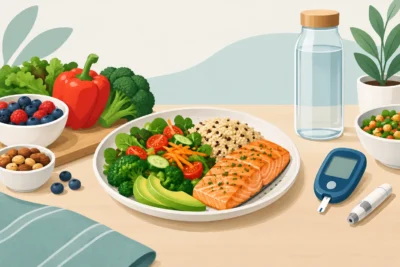
If you want a simple framework, start with the plate method. Fill half your plate with non-starchy vegetables, one quarter with protein, and one quarter with carbohydrate-rich foods. This approach is easy to remember and works well at home, at restaurants, and even during busy weeks.
Non-starchy vegetables include foods like broccoli, spinach, zucchini, green beans, cauliflower, peppers, cucumbers, salad greens, and asparagus. These foods add volume and fiber without sending blood sugar up quickly. Protein can come from chicken, turkey, eggs, fish, Greek yogurt, cottage cheese, tofu, tempeh, or beans.
For the carbohydrate portion, think quality first. Beans, lentils, berries, plain oatmeal, quinoa, sweet potatoes, and brown rice are usually better choices than pastries, white bread, sugary cereal, chips, and desserts. That does not mean you can never eat those foods, but they are harder to fit into a blood sugar-friendly routine.
Prediabetes meal planning guide for breakfast, lunch, and dinner
Breakfast is where many blood sugar problems begin. A bagel, sweet coffee drink, juice, or cereal can push glucose up fast and leave you hungry again by midmorning. A stronger breakfast usually includes protein first.
Good examples include eggs with sauteed vegetables and a slice of whole grain toast, plain Greek yogurt with berries and chia seeds, or oatmeal cooked with extra protein from Greek yogurt or a side of eggs. If you like smoothies, keep them balanced by using unsweetened milk, protein, berries, greens, and a small amount of fruit rather than fruit juice and sweetened yogurt.

Lunch works best when it is predictable. A large salad with grilled chicken, olive oil, and beans can work well. So can a turkey wrap in a high-fiber tortilla with cut vegetables on the side, or leftover salmon with roasted vegetables and quinoa. The key is not to build lunch around crackers, chips, or giant sandwiches that leave you sleepy an hour later.
Dinner should feel satisfying, not restrictive. Think grilled chicken with Brussels sprouts and a small baked sweet potato, shrimp stir-fry with mixed vegetables over cauliflower rice or a modest scoop of brown rice, or taco bowls with lean ground turkey, lettuce, salsa, avocado, and black beans. These meals are filling, practical, and easier to stick with than extreme low-carb rules for most people.
Smart snacks that do not sabotage your progress
Some people do well with three meals and no snacks. Others need a small snack to avoid overeating later. It depends on your appetite, activity level, medications, and schedule.
If you snack, build it like a mini meal instead of grabbing pure carbs. Apple slices with peanut butter, cottage cheese with cucumber, a boiled egg with a few whole grain crackers, or Greek yogurt with cinnamon are better options than granola bars, pretzels, or cookies. The goal is to stay steady, not constantly feed cravings.
Foods to limit without feeling deprived
You do not need to fear food, but some foods make blood sugar control much harder. Sugary drinks are one of the biggest problems because they deliver a large glucose load with almost no fiber or fullness. Soda, sweet tea, energy drinks, and many coffeehouse drinks can work against your progress quickly.
Refined carbs also deserve attention. White bread, white rice, sugary cereals, pastries, and many packaged snack foods digest fast and often lead to more hunger. Even foods that sound healthy, like flavored yogurt, granola, dried fruit, or store-bought smoothies, can contain more sugar than expected.
That said, perfection is not required. If your favorite food is pizza or dessert, the better move is to control frequency and portions rather than pretend you will never eat it again. A realistic plan beats a strict one you abandon in five days.
How to grocery shop for blood sugar control
A meal plan only works if your kitchen supports it. Before shopping, choose a few proteins, a few vegetables, and one or two better carb sources for the week. That alone can simplify your decisions.
A practical cart might include eggs, chicken breast, canned tuna, plain Greek yogurt, spinach, frozen broccoli, bell peppers, salad greens, berries, apples, black beans, old-fashioned oats, brown rice, avocado, nuts, and olive oil. Frozen vegetables are completely fine and often make healthy eating easier on busy days.
Read labels with a skeptical eye. Look at serving size, added sugar, and fiber. Products marketed as healthy can still be heavily processed. You want foods that keep ingredients simple and help you stay full.
Meal timing, portions, and the role of consistency
When you have prediabetes, timing can matter almost as much as food quality. Skipping meals all day and then eating a huge dinner can lead to larger blood sugar swings. Many people feel better with regular meals spaced through the day.
Portions matter too, especially with carbohydrate-heavy foods. Oatmeal is not the same as a giant bowl of oatmeal topped with honey, banana, and dried fruit. Brown rice can fit, but a restaurant-sized serving may be too much for your body to handle well. You do not need to obsess over every bite, but you do need to respect portions.
Consistency is where results usually happen. One healthy breakfast does not fix high blood sugar, just like one dessert does not ruin everything. What changes your numbers is the pattern you repeat.
What to do if you eat out often
Eating out is manageable if you make a few smart decisions. Start with protein and vegetables when scanning the menu. Grilled fish, chicken, burgers without the oversized bun, fajita plates, salad with protein, and bunless sandwiches can all work depending on the restaurant.
Watch the hidden extras. Sauces, sweet dressings, fries, chips, and oversized drink servings can turn a decent meal into a blood sugar spike. If you want a carb side, choose one intentionally and keep the portion reasonable.
A realistic mindset makes this easier
The best plan is the one you can follow next week, next month, and during real life stress. Some people do well with lower carb eating. Others prefer a moderate carb approach with tighter portion control. If your energy improves, cravings go down, and your blood sugar trends in the right direction, you are likely moving in the right direction.
Give yourself room to learn. Monitor how meals affect your hunger, weight, and blood sugar if you track it. If breakfast leaves you hungry in two hours, change it. If rice at dinner sends your numbers up more than beans or sweet potato, use that information. Your body gives feedback if you pay attention.
Prediabetes is not a life sentence. It is a chance to act while change is still very possible. Start with your next plate, make it balanced, and let small wins build the momentum your health needs.
Important notice: The content of Diabetes Cure Now is solely educational and informational and does not replace the evaluation, diagnosis, or treatment of a doctor or health professional. Before making changes to your diet, exercise, or medication, consult with a qualified professional..
Content reviewed for educational purposes and based on public medical sources.
Sources consulted
- American Diabetes Association (ADA)
- Mayo Clinic
- CDC
- NIH
12 Diabetic Recipes That Keep Meals Balanced
Diabetic Kidney Health Guide for Daily Protection

How to Start Walking With Diabetes Safely
10 Healthy Soups for Diabetics That Satisfy
Do Chia Seeds for Blood Sugar Really Help?

How to Reduce Dawn Phenomenon Naturally
Is Fruit Safe for Diabetes? What to Know
How to Walk After Meals for Better Blood Sugar