
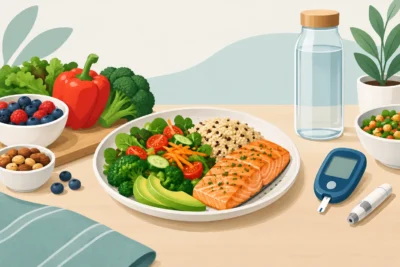
Fiber Intake for Diabetes Management


If your blood sugar seems to spike no matter how careful you are with meals, fiber may be the missing piece. Fiber intake for diabetes management matters because it changes how quickly food is digested, how full you feel after eating, and how steady your glucose stays between meals.
A lot of people with Type 2 diabetes focus only on cutting sugar and carbs. That helps, but it does not tell the whole story. Two meals can contain the same amount of carbs and still affect your blood sugar very differently depending on how much fiber they contain.
What you\'ll find in this article?
- Why fiber matters for blood sugar control
- Soluble vs insoluble fiber
- How much fiber intake for diabetes management makes sense?
- Best foods to increase fiber without making meals complicated
- Smart ways to use fiber at each meal
- What fiber can and cannot do
- Should you use a fiber supplement?
- A realistic plan that actually sticks
Why fiber matters for blood sugar control
Fiber is the part of plant foods your body does not fully digest. That sounds simple, but the effect is powerful. When a meal contains enough fiber, digestion slows down. Glucose enters the bloodstream at a more controlled pace, which can reduce sharp spikes after eating.
That slower digestion has another benefit. You stay full longer. For people trying to lose weight or reduce constant snacking, that matters. Better appetite control often leads to lower calorie intake without feeling as deprived, and weight loss can improve insulin sensitivity over time.
Fiber also supports gut health, which may play a role in metabolic health. This is one reason high-fiber eating patterns are often linked with better blood sugar control, lower cholesterol, and improved long-term health markers. Fiber is not a magic fix, but it is one of the most useful tools you can add to a diabetes-friendly eating plan.

Soluble vs insoluble fiber
Not all fiber works the same way. Soluble fiber dissolves in water and forms a gel-like texture in the gut. This type is especially helpful for slowing digestion and supporting more stable blood sugar. You will find it in foods like oats, beans, lentils, apples, citrus fruits, chia seeds, and barley.
Insoluble fiber does not dissolve in water. It adds bulk to stool and helps keep digestion moving. It may not affect post-meal blood sugar as directly as soluble fiber, but it still supports overall health and often comes packaged with nutrient-dense foods such as vegetables, nuts, seeds, and whole grains.
You do not need to obsess over the difference at every meal. In real life, many high-fiber foods contain both types. What matters most is eating more whole plant foods consistently.
How much fiber intake for diabetes management makes sense?
Most adults do not get enough fiber. Many people average far below the amount needed for good metabolic health. A practical target is to work toward at least 25 to 35 grams of fiber per day, with some people benefiting from more depending on calorie needs and tolerance.
The key word is work toward. If you currently eat a low-fiber diet, jumping from 10 grams a day to 35 overnight can leave you bloated, gassy, and frustrated. A better approach is to increase fiber gradually over one to two weeks while also drinking more water.

This is where people often quit too early. They add a huge bowl of beans, a fiber supplement, and bran cereal all in one day, then feel miserable. That is not a fiber problem. That is a too-much-too-fast problem.
Best foods to increase fiber without making meals complicated
You do not need specialty products to eat more fiber. In fact, some of the best options are regular grocery staples.
Beans and lentils are among the strongest choices for diabetes management because they provide fiber, protein, and slow-digesting carbs in one package. They tend to be filling and budget-friendly, and they work well in soups, salads, tacos, or simple bowl meals.
Nonstarchy vegetables are another easy win. Broccoli, Brussels sprouts, green beans, cauliflower, zucchini, leafy greens, and peppers add fiber with relatively little impact on blood sugar. They also help bulk up meals so you feel satisfied.
Berries are often a better fruit choice than fruit juice or dried fruit because they offer more fiber with less concentrated sugar. Raspberries and blackberries are especially useful. Apples and pears can also fit well, especially when eaten with the skin.
Whole grains can help, but this is where labels matter. Whole grain bread is not always high in fiber, and some products use marketing language better than actual ingredients. Oats, barley, quinoa, and high-fiber whole grain cereals can be helpful, but compare nutrition labels instead of assuming a food is a strong fiber source.
Nuts and seeds deserve attention too. Chia seeds, flaxseeds, almonds, and pistachios add fiber and healthy fats, which can help slow digestion. Even a tablespoon or two added to yogurt, oatmeal, or a smoothie can make a meal more blood sugar-friendly.
Smart ways to use fiber at each meal
The easiest way to improve fiber intake for diabetes management is to stop thinking about it as a separate task. Build it into what you already eat.
At breakfast, replace a low-fiber pastry or sugary cereal with oatmeal topped with chia seeds and berries. If you prefer eggs, add vegetables and pair them with half an avocado or a slice of truly high-fiber toast.
At lunch, a salad becomes much more effective when it includes fiber-rich ingredients such as chickpeas, pumpkin seeds, or extra vegetables. Soup made with beans or lentils can also work very well, especially if you want something simple and filling.
At dinner, try making half your plate nonstarchy vegetables, then add a protein source and a fiber-rich carb such as black beans, lentils, or a smaller portion of a true whole grain. This combination usually works better than a large serving of white rice, mashed potatoes, or pasta on its own.
Snacks matter too. If you often get hungry between meals, choose something that combines fiber with protein or fat. An apple with peanut butter, plain yogurt with flaxseed, or raw vegetables with hummus will usually hold you better than crackers or granola bars.
What fiber can and cannot do
Fiber is helpful, but it is not a free pass to eat unlimited carbs. A high-fiber muffin loaded with sugar is still a muffin. A processed snack with added fiber powder is still processed food. This is where context matters.
Fiber works best when it comes from whole or minimally processed foods. It can improve blood sugar response, but it does not erase the effect of oversized portions, sugary drinks, frequent snacking, or a lack of movement. If you are serious about improving diabetes naturally, fiber should be part of the plan, not the entire plan.
That said, even small changes can move you in the right direction. Swapping white bread for a higher-fiber option, adding beans to dinner twice a week, or starting the day with oats instead of cereal can create a noticeable difference over time.
Should you use a fiber supplement?
Sometimes, yes. A fiber supplement can help if your diet is falling short, especially if you struggle with constipation or know you are not eating enough plant foods. Some people find soluble fiber supplements useful for improving fullness and reducing glucose spikes.
But food should come first whenever possible. Whole foods bring vitamins, minerals, antioxidants, water, and other compounds that supplements do not fully replace. Supplements can support a good diet, but they should not be used to cover up a consistently poor one.
There is also an important medication issue. Fiber supplements may affect how some medicines are absorbed, so timing matters. If you take diabetes medication or other prescriptions, it is wise to ask your healthcare provider or pharmacist how to space them properly.
A realistic plan that actually sticks
You do not need a perfect diet to see progress. You need repeatable habits. Start with one meal a day and make it more fiber-rich. Then add another. Read labels, but spend more time in the produce aisle, the bean section, and the whole foods part of your grocery store than in the snack aisle.
At Diabetes Cure Now, the goal is not just to give you nutrition facts. It is to help you take back control in a way that feels doable. Fiber is one of those rare nutrition strategies that is simple, affordable, and effective when you use it consistently.
If your blood sugar has felt unpredictable, this is a strong place to start. Add fiber slowly, pair it with balanced meals, and pay attention to how your body responds. Sometimes the most powerful change is not a dramatic overhaul. It is a steady choice you can keep making tomorrow.
Important notice: The content of Diabetes Cure Now is solely educational and informational and does not replace the evaluation, diagnosis, or treatment of a doctor or health professional. Before making changes to your diet, exercise, or medication, consult with a qualified professional..
Content reviewed for educational purposes and based on public medical sources.
Sources consulted
- American Diabetes Association (ADA)
- Mayo Clinic
- CDC
- NIH
12 Diabetic Recipes That Keep Meals Balanced

Diabetic Kidney Health Guide for Daily Protection

How to Start Walking With Diabetes Safely

10 Healthy Soups for Diabetics That Satisfy
Do Chia Seeds for Blood Sugar Really Help?

How to Reduce Dawn Phenomenon Naturally
Is Fruit Safe for Diabetes? What to Know

How to Walk After Meals for Better Blood Sugar