
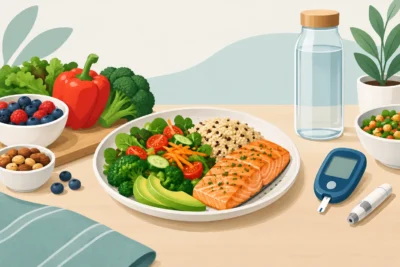
Glycemic Index vs Glycemic Load Explained


A bowl of oatmeal and a bowl of sugary cereal may both contain carbohydrates, but they can produce very different blood sugar responses. That is where glycemic index vs glycemic load becomes useful. These two tools can help you look beyond calories and carb grams to make smarter food choices for steadier energy, fewer spikes, and better Type 2 diabetes management.
Neither number can predict your exact glucose reading. Your body, portion size, medication, sleep, stress, and activity all matter. Still, learning the difference gives you a practical way to spot foods that deserve a smaller portion, a better pairing, or a less frequent place on your plate.
What you\'ll find in this article?
- What Is the Glycemic Index?
- Glycemic Index vs Glycemic Load: The Key Difference
- Why GI and GL Can Be Misleading on Their Own
- How to Use Glycemic Load at Everyday Meals
- Better Swaps for a Lower Glycemic Load
- Foods With Low GI Are Not Always the Best Choice
- Should You Track GI or GL if You Have Diabetes?
What Is the Glycemic Index?
The glycemic index, often called GI, ranks carbohydrate-containing foods by how quickly they raise blood sugar compared with pure glucose. The scale runs from 0 to 100. A higher number generally means a food is digested and absorbed more quickly, causing blood glucose to rise faster.
Low-GI foods score 55 or below. Many non-starchy vegetables, beans, lentils, plain Greek yogurt, apples, and steel-cut oats fall into this range. Medium-GI foods score 56 to 69. High-GI foods score 70 or above and often include refined grains, sugary cereals, white rice, white potatoes, and many processed snack foods.
GI is useful because it shows food quality in a way that total carbohydrate counts do not. For example, 30 grams of carbohydrate from lentils usually affects blood sugar differently than 30 grams from white bread.

But GI has a major limitation: it does not tell you how much carbohydrate you actually eat in a normal serving. That is why glycemic load matters.
Glycemic Index vs Glycemic Load: The Key Difference
Glycemic load, or GL, combines the quality of a carbohydrate with the amount in a typical serving. It gives a more realistic view of how a portion of food may affect blood sugar.
The calculation is simple: multiply the food's GI by the grams of carbohydrate in the serving, then divide by 100. You do not need to calculate this at every meal. The important idea is that a food may have a high GI but a low glycemic load if it contains relatively little carbohydrate per serving.
Watermelon is a classic example. It has a fairly high GI, which can sound alarming at first. Yet a standard serving is mostly water and contains a modest amount of carbohydrate, so its glycemic load is low. For most people, enjoying a reasonable portion of watermelon is very different from eating a large serving of candy or drinking a sweetened soda.
A low GL is 10 or less, a medium GL is 11 to 19, and a high GL is 20 or more. When you are deciding what to eat, glycemic load is often the more practical number because it accounts for portion size.

Why GI and GL Can Be Misleading on Their Own
GI and GL are helpful guides, not food laws. A food's GI is tested under controlled conditions, usually after people eat it by itself following an overnight fast. Real meals do not work that way.
When you eat carbohydrates with protein, fat, and fiber, digestion generally slows down. A baked potato eaten alone may raise glucose faster than a smaller baked potato served with grilled chicken, broccoli, and a salad with olive oil. The meal still contains carbs, but the overall response may be steadier.
Cooking and ripeness also change the picture. Riper bananas tend to raise blood sugar faster than greener bananas. Al dente pasta usually has a lower glycemic impact than pasta cooked until very soft. Instant oatmeal tends to affect glucose more quickly than less processed oats.
Your personal response can also differ from a chart. Some people notice a strong spike after brown rice but do well with beans. Others tolerate fruit well but see higher readings after oatmeal. If you check your blood sugar, your meter or continuous glucose monitor can teach you what your body does with specific portions and meals.
How to Use Glycemic Load at Everyday Meals
Do not let GI and GL turn grocery shopping into a math test. Use them as a quick decision-making filter, especially for foods that make up the largest carbohydrate portion of your meal.
Start by choosing higher-fiber carbohydrates more often. Beans, lentils, chickpeas, non-starchy vegetables, intact whole grains, and whole fruit usually provide more fiber and nutrients than refined bread, crackers, pastries, chips, and sweet drinks. Fiber helps slow digestion and supports fullness, which can make weight management easier.
Then pay attention to portions. Even a nutritious low-GI food can raise glucose when eaten in a very large amount. A large bowl of whole-grain pasta can still deliver a high glycemic load. A smaller serving paired with vegetables and protein is often a better fit for blood sugar control.
Finally, build balanced plates rather than eating carbohydrates alone. Aim to fill about half your plate with non-starchy vegetables, include a palm-sized portion of protein, and add a controlled portion of a high-fiber carbohydrate if desired. This simple structure is easier to follow than chasing perfect GI numbers.
Better Swaps for a Lower Glycemic Load
Small changes repeated daily can make a meaningful difference. Instead of sweetened cereal, try eggs with vegetables or plain Greek yogurt with berries and nuts. Instead of white rice as the base of a meal, try beans, lentils, cauliflower rice, or a smaller portion of brown rice alongside extra vegetables.
Choose whole fruit more often than juice. Orange juice can raise blood sugar quickly because it is easy to drink a large amount and lacks most of the fiber found in a whole orange. The same principle applies to smoothies: they can be nutritious, but large portions of fruit, juice, honey, and sweetened yogurt can create a high glycemic load.
For snacks, pair a carbohydrate with protein or healthy fat. An apple with peanut butter, berries with cottage cheese, or whole-grain crackers with tuna may be more satisfying and gentler on blood sugar than crackers alone. The goal is not to eliminate every carb. It is to make carbohydrates work better in your overall meal pattern.
Foods With Low GI Are Not Always the Best Choice
A low GI label does not automatically make a food supportive of metabolic health. Ice cream can have a lower GI than expected because its fat content slows digestion, but it may still be high in added sugar and calories. Chocolate bars, chips, and other highly processed foods can also produce deceptively moderate GI values.
Focus first on the quality of the food: vegetables, legumes, lean proteins, minimally processed foods, and healthy fats should form the foundation. GI and GL can then help you fine-tune your carbohydrate choices and portions.
This matters especially if you are working on weight loss, prediabetes, or Type 2 diabetes improvement. Consistent meals built around real food, regular movement, better sleep, and gradual weight loss when appropriate can improve insulin sensitivity over time. No glycemic index chart can replace those basics.
Should You Track GI or GL if You Have Diabetes?
You do not have to track either number every day to manage diabetes well. For many people, counting carbohydrates, using the plate method, checking glucose patterns, and limiting added sugars are more useful daily habits.
GI and GL can be especially valuable when you are confused about why two similar foods affect you differently. They can also help when choosing between grains, breakfast options, snack foods, or fruit portions. Use them to ask better questions, not to create food fear.
If you take insulin or medications that can cause low blood sugar, do not make major carbohydrate cuts without discussing them with your clinician. Better food choices can lower glucose, which may mean medication adjustments are needed. Keep monitoring your readings and bring patterns to your healthcare team.
The most powerful choice is the one you can repeat. Choose meals that leave you satisfied, support steadier blood sugar, and fit your real life - then let each better plate become proof that you can take meaningful control of your health.
Important notice: The content of Diabetes Cure Now is solely educational and informational and does not replace the evaluation, diagnosis, or treatment of a doctor or health professional. Before making changes to your diet, exercise, or medication, consult with a qualified professional..
Content reviewed for educational purposes and based on public medical sources.
Sources consulted
- American Diabetes Association (ADA)
- Mayo Clinic
- CDC
- NIH
12 Diabetic Recipes That Keep Meals Balanced
Diabetic Kidney Health Guide for Daily Protection

How to Start Walking With Diabetes Safely
10 Healthy Soups for Diabetics That Satisfy
Do Chia Seeds for Blood Sugar Really Help?

How to Reduce Dawn Phenomenon Naturally
Is Fruit Safe for Diabetes? What to Know
How to Walk After Meals for Better Blood Sugar