
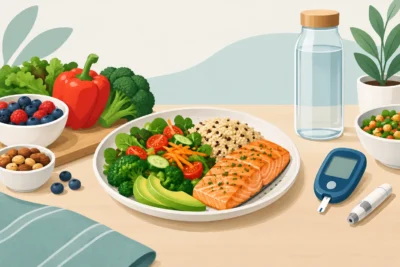
Healthy Fats for Diabetics and Blood Sugar


A breakfast of sweetened cereal can send blood sugar climbing fast. Adding a handful of walnuts to plain Greek yogurt, berries, and cinnamon creates a very different meal experience: more satisfaction, slower digestion, and fewer reasons to hunt for a snack an hour later. That is where healthy fats for diabetics can make a meaningful difference.
Fat does not directly raise blood glucose the way carbohydrates do. But the kind and amount of fat you eat still matter greatly, especially when Type 2 diabetes and heart health are part of the picture. The goal is not to load every meal with fat or eliminate carbohydrates completely. It is to use nourishing fats strategically, alongside fiber-rich carbohydrates and protein, to build meals that support steadier energy and better blood sugar management.
What you\'ll find in this article?
Why Fat Matters When You Have Diabetes
Dietary fat slows how quickly food leaves your stomach. When you pair a healthy fat with a carbohydrate food, the rise in blood sugar may be gentler than it would be with a low-fiber carb eaten alone. For example, apple slices with natural peanut butter are usually more filling and blood-sugar-friendly than apple juice or a plain handful of crackers.
Fat also helps you absorb vitamins A, D, E, and K, supports hormone function, and makes healthy meals more satisfying. Feeling satisfied is not a small benefit. It can make it easier to reduce the cycle of cravings, oversized portions, and frequent snacking that often works against weight and glucose goals.
There is a trade-off. Fat is calorie-dense, with more than twice the calories per gram as carbohydrates or protein. Even healthy choices can contribute to weight gain when portions regularly exceed what your body needs. For people working to improve insulin resistance, the best approach is quality first, then sensible portions.

The Best Healthy Fats for Diabetics
Most people with diabetes benefit from emphasizing unsaturated fats, particularly monounsaturated and polyunsaturated fats. These are the fats commonly found in plant foods, fish, nuts, and seeds. They can support heart health when they replace foods high in refined carbohydrates or saturated fat.
Avocados and Olive Oil
Avocados provide monounsaturated fat, fiber, and potassium in one whole-food package. A few slices on eggs, a salad, or a bean bowl can make a meal more filling without relying on processed dressings or cheese. Because avocado is energy-dense, half of a small avocado is often plenty for one meal.
Extra-virgin olive oil is another practical choice. Use it for salad dressing, roasting vegetables, or lightly sauteing food. A simple dressing made with olive oil, vinegar, herbs, and pepper can turn plain vegetables into something you actually want to eat. Measure it at first if weight loss is a goal. A free-pour from the bottle can add up quickly.
Nuts, Seeds, and Natural Nut Butters
Almonds, walnuts, pistachios, pecans, chia seeds, flaxseed, and pumpkin seeds offer healthy fats along with protein, fiber, and minerals. Walnuts and ground flaxseed are especially useful sources of plant-based omega-3 fats.
Choose unsalted or lightly salted varieties whenever possible, particularly if you have high blood pressure. A small closed handful of nuts, roughly one ounce, is a useful serving. For nut butter, look for products made primarily from nuts, without added sugar or hydrogenated oils. One to two tablespoons paired with fruit, celery, or whole-grain toast can be a satisfying snack.

Fatty Fish
Salmon, sardines, trout, herring, and mackerel contain omega-3 fats that support heart health. This matters because diabetes increases the risk of cardiovascular disease over time. Aim to include fatty fish about twice a week if it fits your preferences and budget.
Canned salmon or sardines can be convenient, affordable options. Watch sodium in canned products, and choose options packed in water or olive oil rather than heavily sweetened sauces. Fish is not a magic blood sugar fix, but replacing processed meats with fish is a powerful upgrade for many people.
Olives, Eggs, and Full-Fat Dairy in Context
Olives make an easy addition to salads and snack plates, offering monounsaturated fat with very few carbohydrates. They can be high in sodium, so portions matter if blood pressure is a concern.
Eggs can also fit into a diabetes-friendly eating pattern. They provide protein and fat without carbohydrates, which can make breakfast more stable than pastries, sugary cereal, or flavored oatmeal packets. If you have high LDL cholesterol, a history of heart disease, or have been told to limit dietary cholesterol, discuss your personal intake with your healthcare professional.
Plain, unsweetened full-fat Greek yogurt or cottage cheese may work well for some people because the fat and protein improve fullness. Others may prefer lower-fat dairy to manage calories or cholesterol. Check labels carefully. Many low-fat flavored products contain enough added sugar to work against your blood sugar goals.
Fats to Limit for Better Metabolic Health
Not every food labeled keto, low-carb, or sugar-free supports long-term diabetes health. Bacon wrapped in cheese may be low in carbohydrates, but eating large amounts of processed meat and saturated fat is not the same as building a heart-protective eating pattern.
Limit trans fats whenever you see them, including products with partially hydrogenated oils in the ingredient list. Also keep saturated fats moderate. Common sources include fatty cuts of red meat, sausage, bacon, butter, cream, fried foods, coconut oil, and large amounts of cheese.
You do not need to fear these foods or swear never to eat them again. The more useful question is what they replace. Swapping butter for olive oil most days, replacing chips with nuts, and choosing salmon over processed meat more often can shift your eating pattern in a direction that supports your long-term health.
How to Use Healthy Fats Without Overdoing Them
Healthy fats work best as part of a balanced plate, not as an extra layer added to an already large meal. Start by building around non-starchy vegetables, a protein source, and a high-fiber carbohydrate such as beans, lentils, oats, or a modest serving of whole grains. Then add a measured fat source for flavor and staying power.
A few practical combinations include oatmeal topped with chia seeds and walnuts; a large salad with chicken, chickpeas, avocado, and olive oil vinaigrette; or roasted vegetables with salmon and a small serving of brown rice. These meals contain carbohydrates, but they also provide fiber, protein, and fat to help prevent the sharp highs and hungry crashes that come from highly processed foods.
Portion awareness is especially valuable with oils, nuts, cheese, and nut butters. You do not have to count every calorie forever, but measuring for a week or two can reveal whether your usual serving is closer to one tablespoon or four. Small adjustments can make a real difference when weight management is part of your plan.
Watch Your Own Blood Sugar Response
No single meal plan works identically for everyone. Your medication, activity level, sleep, stress, kidney function, cholesterol levels, and usual carbohydrate intake all affect how your body responds. If you use a glucose meter or continuous glucose monitor, check patterns before and after meals as directed by your clinician.
Pay attention to both the number and how you feel. Does adding avocado to lunch help you stay full until dinner? Does a handful of nuts prevent an afternoon craving? Does a high-fat restaurant meal leave your glucose elevated for hours because it was also loaded with refined carbs? Your results can help you make practical changes rather than following food rules blindly.
If you take insulin or medications that can cause low blood sugar, do not make major carbohydrate cuts without medical guidance. Improving food quality is a strong first step, but medication needs may change as eating habits, activity, and weight change.
Healthy fats are not a shortcut, but they are a useful tool you can put to work today. Start with one simple replacement at your next meal: olive oil instead of a sugary dressing, walnuts instead of chips, or salmon instead of processed meat. Consistent choices like these give your body a better foundation for steadier blood sugar and a stronger future.
Important notice: The content of Diabetes Cure Now is solely educational and informational and does not replace the evaluation, diagnosis, or treatment of a doctor or health professional. Before making changes to your diet, exercise, or medication, consult with a qualified professional..
Content reviewed for educational purposes and based on public medical sources.
Sources consulted
- American Diabetes Association (ADA)
- Mayo Clinic
- CDC
- NIH
12 Diabetic Recipes That Keep Meals Balanced
Diabetic Kidney Health Guide for Daily Protection

How to Start Walking With Diabetes Safely
10 Healthy Soups for Diabetics That Satisfy
Do Chia Seeds for Blood Sugar Really Help?

How to Reduce Dawn Phenomenon Naturally
Is Fruit Safe for Diabetes? What to Know

How to Walk After Meals for Better Blood Sugar