
How to Avoid Glucose Spikes Without Giving Up Food


That sleepy, foggy feeling after lunch, the sudden hunger two hours after breakfast, or a high number on your glucose meter is not a personal failure. It is useful feedback. Learning how to avoid glucose spikes is less about eating perfectly and more about making a few repeatable choices that slow digestion, improve how your body uses glucose, and make your meals work harder for you.
For people with prediabetes or Type 2 diabetes, steadier blood sugar can support better energy, fewer cravings, and progress with weight and metabolic health. You do not need to live on plain chicken and salad. You do need a practical plan for carbohydrates, portions, movement, and the daily habits that quietly affect glucose.
What you\'ll find in this article?
What causes a glucose spike?
A glucose spike happens when blood sugar rises quickly after eating, drinking, or sometimes during stress or illness. Carbohydrates are not automatically the enemy. Your body turns many carbohydrates into glucose for energy. The issue is how fast that glucose enters your bloodstream and whether your insulin response can keep up.
A large serving of refined carbohydrates, such as soda, sweet cereal, white bread, pastries, fries, or a big bowl of pasta, can raise blood sugar fast because there is little fiber to slow digestion. A meal can also cause a bigger rise when it is eaten alone, in a large portion, or after hours of sitting still.
Your personal response matters. One person may tolerate a small baked potato well when it is served with salmon and vegetables, while another sees a sharp rise. Medication, sleep, stress, activity level, time of day, and insulin resistance all change the picture. That is why a sustainable strategy combines smart defaults with attention to your own numbers.

How to avoid glucose spikes at every meal
The most effective changes are usually simple enough to repeat. Start with one or two, then build from there rather than overhauling your entire kitchen overnight.
Build meals around protein, fiber, and healthy fat
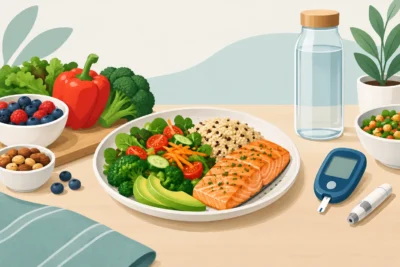
Instead of making starch the center of the plate, begin with protein and non-starchy vegetables. Eggs, Greek yogurt without added sugar, fish, chicken, turkey, tofu, beans, and cottage cheese can make meals more satisfying and may slow the blood sugar rise from carbohydrates. Add vegetables such as broccoli, green beans, spinach, peppers, zucchini, salad greens, cauliflower, or mushrooms for fiber and volume.
Healthy fats also help meals feel satisfying. Olive oil, avocado, nuts, seeds, and natural nut butter are useful choices, though portions still matter because fats are calorie-dense. A balanced plate might include grilled chicken, roasted vegetables, a salad with olive oil, and a modest portion of beans or brown rice. The carbohydrate is still there, but it is no longer doing all the work.
Choose carbohydrates for fiber, not just flavor
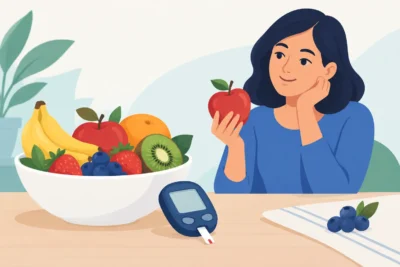
Carbohydrates can fit into a blood sugar-friendly eating pattern, especially when they are high in fiber and served in realistic portions. Favor beans, lentils, steel-cut oats, quinoa, plain Greek yogurt with berries, whole fruit, sweet potatoes, and intact whole grains when they work for your body.
The form of the food matters. An orange is usually a better choice than orange juice because the whole fruit contains fiber and takes longer to eat. A bowl of oatmeal with nuts and berries is generally steadier than a sugary instant oatmeal packet. Even so-called healthy foods can raise glucose if the serving is large enough. Treat portion size as part of the plan, not an afterthought.

Avoid drinking your carbohydrates
Sweet drinks can raise blood sugar quickly because liquid calories move through the stomach fast and do little to satisfy hunger. Regular soda, sweet tea, energy drinks, flavored coffee beverages, fruit juice, and many smoothies can contain more sugar than expected.
Water, sparkling water, unsweetened tea, and black coffee are usually easier choices for blood sugar control. If you enjoy a smoothie, make it more balanced by using unsweetened milk or yogurt, berries, chia seeds, and protein rather than fruit juice, sweetened yogurt, or several bananas.
Use meal order to your advantage
The order in which you eat can make a noticeable difference for some people. Try eating vegetables first, then protein and fat, and save starches or dessert for the end of the meal. This approach may slow the speed at which glucose reaches the bloodstream, especially when the meal contains fiber-rich vegetables and a solid protein source.
It is not a free pass to eat unlimited bread or sweets. It is a small tool that can make a normal meal more glucose-friendly without adding complicated rules.
Move after you eat, even briefly
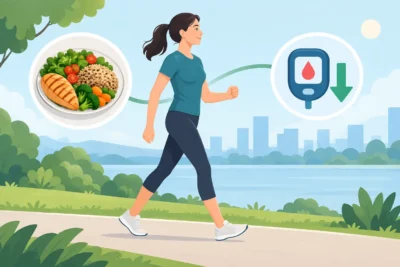
A 10- to 20-minute walk after meals is one of the most practical ways to reduce post-meal blood sugar. Working muscles can use circulating glucose for fuel, which means your body does not have to rely entirely on insulin to bring levels down. Walking after your largest carbohydrate meal is a strong place to start.
You do not need a gym or a perfect workout. Walk the dog, do light housework, take stairs, march in place during a television show, or do a few rounds of chair squats and wall pushups. Consistency matters more than intensity at first.
Strength training is also valuable because muscle tissue improves glucose disposal over time. Two or three weekly sessions using resistance bands, body weight, dumbbells, or machines can support better insulin sensitivity. If joint pain, neuropathy, heart disease, or balance problems limit exercise, ask your health care professional about a safe starting point.
Stop arriving at meals overly hungry
Skipping meals can backfire for many people. When you become extremely hungry, it is easier to eat quickly, choose refined carbohydrates, and take a larger portion than your body needs. Some people do well with a structured eating window or fewer meals, but that approach is not right for everyone, particularly if glucose-lowering medication is involved.
Aim for regular meals that leave you comfortably satisfied. If you need a snack, pair a carbohydrate with protein or fat: an apple with peanut butter, a small handful of nuts with berries, or vegetables with hummus. A snack built around cookies, chips, or crackers alone is more likely to lead to another hunger-and-craving cycle.
Protect sleep and manage stress
A poor night of sleep can make blood sugar harder to manage the next day. When you are tired, your body may be more insulin resistant, and high-calorie foods become harder to resist. Set a realistic bedtime, limit late-night heavy meals, and keep caffeine earlier in the day if it interferes with sleep.
Stress can raise glucose even when your meals have not changed. Stress hormones signal the liver to release stored glucose, which is helpful in an emergency but frustrating when you are dealing with chronic work pressure, family concerns, or poor sleep. A short walk, slow breathing, prayer, stretching, journaling, or time outdoors can lower the intensity of that stress response. The goal is not to eliminate stress. It is to give your body a regular way to come back down.
Use your glucose readings as a personal guide
If you have a meter or continuous glucose monitor, use it to learn rather than to judge yourself. Check blood sugar as directed by your clinician, often before meals and about one to two hours after starting a meal. Keep a simple note of what you ate, how much, activity, sleep, and the result.
Look for patterns over several days. Maybe breakfast cereal sends your numbers higher than expected, while eggs and berries keep you steady. Maybe a restaurant meal is manageable when you skip the sweet drink and walk afterward. This information helps you make targeted changes instead of cutting out every food you enjoy.
Your glucose targets should be individualized. Many adults are advised to aim for a post-meal level below 180 mg/dL, but age, pregnancy, medications, health conditions, and hypoglycemia risk can change that goal. Your clinician can help set numbers that fit your situation.
Be careful when changing habits on medication
Food and activity changes can improve blood sugar, which is encouraging, but they can also increase the risk of low blood sugar if you use insulin or medicines that stimulate insulin release, such as sulfonylureas. Do not stop or reduce prescribed medication on your own. Talk with your prescribing clinician if your readings are falling, you are changing your diet substantially, or you are adding regular exercise.
Seek prompt medical care for very high readings accompanied by vomiting, confusion, severe weakness, rapid breathing, or signs of dehydration. Lifestyle habits are powerful, but they work best alongside appropriate medical guidance.
You do not need to fix every meal this week. Choose one action you can repeat today: replace a sweet drink with water, put vegetables and protein on your plate first, or take a walk after dinner. Those ordinary decisions, repeated often, can help your blood sugar become more predictable and give you real evidence that your health can move in a better direction.
Important notice: The content of Diabetes Cure Now is solely educational and informational and does not replace the evaluation, diagnosis, or treatment of a doctor or health professional. Before making changes to your diet, exercise, or medication, consult with a qualified professional..
Content reviewed for educational purposes and based on public medical sources.
Sources consulted
- American Diabetes Association (ADA)
- Mayo Clinic
- CDC
- NIH
12 Diabetic Recipes That Keep Meals Balanced
Diabetic Kidney Health Guide for Daily Protection
How to Start Walking With Diabetes Safely

10 Healthy Soups for Diabetics That Satisfy
Do Chia Seeds for Blood Sugar Really Help?

How to Reduce Dawn Phenomenon Naturally
Is Fruit Safe for Diabetes? What to Know
How to Walk After Meals for Better Blood Sugar