
Portion Control Diabetes Guide for Steady Blood Sugar


A large restaurant pasta bowl can hold three or four servings, yet it is easy to eat the whole thing while thinking of it as one meal. That gap between what looks normal and what your body needs is where blood sugar trouble often begins. This portion control diabetes guide gives you a practical way to serve satisfying meals that support steadier glucose, weight goals, and long-term metabolic health.
Portion control is not about eating tiny meals or feeling punished. It is about giving carbohydrates, protein, and fats a job on your plate. When portions match your needs, you can reduce the size of post-meal blood sugar spikes without giving up every food you enjoy.
What you\'ll find in this article?
- Why Portion Size Changes Blood Sugar
- The Portion Control Diabetes Guide: Start With Your Plate
- Use Your Hand When Measuring Cups Are Not Practical
- Watch the Foods That Are Easy to Overeat
- Slow Down So Your Body Can Signal Fullness
- Build Portions That Actually Keep You Full
- Make Portion Control Easier at Home and Away
Why Portion Size Changes Blood Sugar
Carbohydrates raise blood glucose more directly than protein or fat. That includes obvious foods such as bread, rice, cereal, sweets, and potatoes, but also fruit, milk, yogurt, and many packaged snacks. A nutritious food can still push blood sugar higher than you want if the serving is too large.
The amount matters because your body has to process the total carbohydrate load at one time. A cup of cooked rice may affect you very differently from three cups, even when both are brown rice. Fiber, protein, fat, activity, sleep, medication, and your individual insulin response also matter, so there is no single perfect portion for everyone.
For many people with Type 2 diabetes or prediabetes, reducing oversized portions helps with more than glucose numbers. It can support gradual weight loss, reduce cravings driven by sharp blood sugar swings, and make meals feel more predictable. If you take insulin or medicines that can cause low blood sugar, do not make major carbohydrate cuts without discussing a plan with your prescribing clinician.

The Portion Control Diabetes Guide: Start With Your Plate
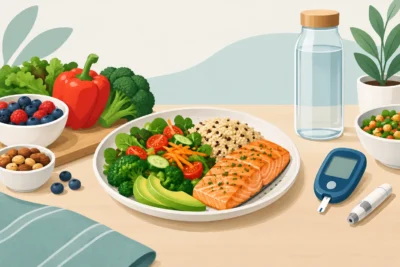
The plate method is one of the simplest ways to build a balanced meal without measuring every bite. Use a regular 9-inch dinner plate when possible, rather than a large restaurant-style plate.
Fill half the plate with non-starchy vegetables. Think broccoli, green beans, salad greens, zucchini, asparagus, cauliflower, cabbage, peppers, mushrooms, or tomatoes. These foods add volume, fiber, and nutrients with relatively little impact on blood sugar.
Fill one quarter with protein. A reasonable starting serving is about the size and thickness of your palm: chicken, turkey, fish, eggs, tofu, lean beef, cottage cheese, or plain Greek yogurt. Protein slows digestion and helps a meal stay satisfying, which can make it easier to stop eating when you are comfortably full.
Use the final quarter for a high-fiber carbohydrate. Examples include beans, lentils, sweet potato, corn, winter squash, quinoa, brown rice, or whole-grain pasta. The exact serving depends on your glucose response and treatment plan, but the plate method prevents the starch from taking over the meal.
Add a small amount of healthy fat for flavor and fullness, such as avocado, nuts, seeds, olive oil, or a simple olive-oil-based dressing. Fat is calorie-dense, so it deserves a portion too. A large pour of oil or a handful after handful of nuts can quietly add far more energy than expected.

A Simple Dinner Example
Instead of a plate piled with spaghetti, try a palm-sized portion of grilled chicken, a large serving of roasted vegetables, and about one fist-sized serving of whole-grain pasta or beans. Add marinara sauce and a small sprinkle of cheese. The meal remains familiar, but the balance is much more favorable for blood sugar.
Use Your Hand When Measuring Cups Are Not Practical
You do not need to carry measuring tools everywhere. Your hand travels with you and provides a useful visual guide. Because larger bodies often need more food than smaller bodies, this method naturally offers some flexibility.
A closed fist is roughly one cup, which works well for cooked vegetables, fruit, or a starch serving. Your palm is a useful guide for a protein serving. A cupped hand is often close to a serving of cooked grains, beans, or snack foods. Your thumb approximates a serving of oils, nut butter, mayonnaise, or salad dressing.
These are starting points, not medical prescriptions. Check your blood glucose as recommended by your care team, especially after trying new meals. If your readings are consistently higher than your target after a certain food or portion, reduce that carbohydrate portion next time or pair it with more vegetables and protein.
Watch the Foods That Are Easy to Overeat
Some foods are nutritious but highly concentrated. Nuts, trail mix, cheese, nut butter, dried fruit, granola, and avocado can fit into a diabetes-friendly eating pattern, but portions can climb quickly. Pouring directly from a bag or eating in front of a screen makes it harder to notice how much you have eaten.
Other foods create a problem because the serving is misleading. A large bagel may equal several bread servings. A bottled smoothie can contain as much sugar as a dessert. Restaurant muffins, fries, burritos, and specialty coffee drinks are frequently much larger than a standard serving.
You do not have to label these foods as forbidden. Instead, decide your portion before you begin. Split a restaurant entrée, put half away immediately, order a smaller size, or serve snack foods into a bowl rather than eating from the package. Those small decisions are often more effective than relying on willpower once you are hungry.
Slow Down So Your Body Can Signal Fullness
Portion control works better when you can recognize satisfaction before you are overly full. Your brain and digestive system need time to communicate. If you eat very quickly, you may finish a large meal before fullness catches up.
Try putting your fork down between bites, chewing thoroughly, and taking a pause halfway through the meal. Start with vegetables or protein when possible. Drink water, unsweetened tea, or sparkling water instead of sweet beverages, which add sugar without creating much fullness.
It also helps to eat at a table rather than grazing from the kitchen counter. This is not about being perfect. It is about creating enough awareness to choose whether you genuinely want more food instead of automatically reaching for it.
Build Portions That Actually Keep You Full
An overly restrictive meal can backfire. If breakfast is only toast or a small bowl of sugary cereal, hunger may return quickly and lead to larger portions later. The goal is not simply to eat less. The goal is to eat in a way that keeps energy and appetite more stable.
At breakfast, pair a controlled carbohydrate portion with protein and fiber. For example, have eggs with vegetables and one slice of whole-grain toast, or plain Greek yogurt with berries, chia seeds, and a measured portion of nuts. For lunch, make half the plate vegetables before adding a protein and a modest portion of beans, whole grains, or fruit.
Fruit deserves special mention. It contains natural sugar, but whole fruit also offers fiber and nutrients. Most people do not need to avoid it. A small apple, orange, peach, or cup of berries is generally easier on blood sugar than juice, which removes much of the fiber and is easy to consume in large amounts.
Make Portion Control Easier at Home and Away
Your environment can either support your goals or constantly challenge them. Use smaller bowls and plates for calorie-dense foods, keep ready-to-eat vegetables visible, and store treats in less convenient places. When cooking, portion leftovers into individual containers before sitting down to eat.
At restaurants, ask for sauces and dressings on the side, choose grilled or roasted foods more often than fried options, and consider sharing an entrée. You can also request a to-go container when the food arrives. This is not a lack of discipline. It is a practical strategy for portions designed to encourage overeating.
Consistency matters more than one perfect meal. Start by adjusting the meal that causes your highest readings or your biggest overeating pattern. For some people that is an oversized dinner; for others, it is late-night snacking or sweet drinks. Make one change, observe how you feel and how your numbers respond, then build from there.
You have more influence over your blood sugar than a food label or restaurant portion may suggest. Each balanced plate is a clear, repeatable step toward better control - and a way to prove to yourself that healthier habits can fit real life.
Important notice: The content of Diabetes Cure Now is solely educational and informational and does not replace the evaluation, diagnosis, or treatment of a doctor or health professional. Before making changes to your diet, exercise, or medication, consult with a qualified professional..
Content reviewed for educational purposes and based on public medical sources.
Sources consulted
- American Diabetes Association (ADA)
- Mayo Clinic
- CDC
- NIH
12 Diabetic Recipes That Keep Meals Balanced
Diabetic Kidney Health Guide for Daily Protection

How to Start Walking With Diabetes Safely
10 Healthy Soups for Diabetics That Satisfy
Do Chia Seeds for Blood Sugar Really Help?

How to Reduce Dawn Phenomenon Naturally
Is Fruit Safe for Diabetes? What to Know
How to Walk After Meals for Better Blood Sugar