
Prediabetes Diet Beginner Guide for Real Life


A prediabetes diagnosis can feel like a warning bell, especially if you have watched a parent, sibling, or friend struggle with Type 2 diabetes. But it is also a powerful opportunity. This prediabetes diet beginner guide is built around one practical goal: making everyday food choices that help steady your blood sugar without making life feel like one long restriction.
You do not need a perfect diet, expensive specialty foods, or a dramatic cleanse. Your body responds to what you do repeatedly. A few reliable changes at breakfast, lunch, dinner, and snack time can support weight loss when needed, improve insulin sensitivity, and help move you away from the path toward Type 2 diabetes.
What you\'ll find in this article?
- What Should You Eat With Prediabetes?
- Use the Simple Plate Method
- The First Foods to Cut Back On
- Prediabetes Diet Beginner Guide: Build Better Breakfasts
- Shop for Meals, Not Diet Foods
- Make Change Manageable at Restaurants and Home
- Food Works Better Alongside Movement and Sleep
- When to Get Personal Medical Guidance
What Should You Eat With Prediabetes?
Start by building meals around foods that digest more slowly and keep you full longer: non-starchy vegetables, protein, fiber-rich carbohydrates, and healthy fats. This combination reduces the chance that a meal will send blood sugar sharply upward and leave you hungry again an hour later.
That does not mean carbohydrates are off limits. Carbohydrates raise blood glucose more directly than protein or fat, but the type, amount, and context matter. A bowl of sugary cereal eaten alone affects the body differently than a measured serving of beans alongside grilled chicken, vegetables, and avocado.
Think less about finding one "perfect" food and more about improving the overall pattern on your plate. Meals built mostly from minimally processed foods tend to make blood sugar management easier because they provide more fiber, protein, and nutrients with fewer added sugars.

Use the Simple Plate Method
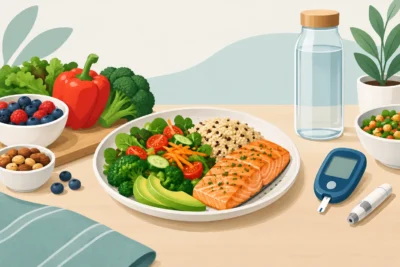
For most beginners, the plate method is easier to sustain than counting every calorie or gram of carbohydrate. At lunch and dinner, fill about half your plate with non-starchy vegetables. Use one quarter for protein and one quarter for a high-fiber carbohydrate. Add a small amount of healthy fat if desired.
Non-starchy vegetables include salad greens, broccoli, cauliflower, green beans, zucchini, peppers, mushrooms, cucumbers, tomatoes, cabbage, and asparagus. They add volume and fiber with relatively little impact on blood sugar.
For protein, choose options such as eggs, fish, chicken, turkey, plain Greek yogurt, cottage cheese, tofu, tempeh, lean beef, or beans. Protein helps slow digestion and can make a lower-sugar eating pattern much more satisfying.
Your carbohydrate quarter could be black beans, lentils, oats, quinoa, brown rice, sweet potato, corn, fruit, or whole-grain bread. The right portion varies from person to person. If you are very active, your body may handle more carbohydrates than someone who is sedentary. If you check blood glucose at home, your readings can help you and your healthcare professional see which foods and portions work best for you.
The First Foods to Cut Back On
You do not have to throw out every food you enjoy. Still, some foods make blood sugar control much harder because they are quickly digested and easy to overeat. Start by reducing sweetened drinks, candy, pastries, cookies, chips, white bread, large bowls of pasta, and heavily processed snack foods.

Sugary drinks deserve special attention. Soda, sweet tea, energy drinks, flavored coffee beverages, fruit punch, and many bottled smoothies can deliver a large amount of sugar without making you feel full. Replacing them with water, sparkling water, unsweetened tea, or coffee with minimal added sugar is one of the fastest changes you can make.
Fruit is different from soda or candy. Whole fruit contains water and fiber, so it is generally a better choice than juice. A small apple with peanut butter, berries with plain Greek yogurt, or an orange after a balanced meal can fit well into a prediabetes-friendly routine. Fruit juice, even when labeled 100% juice, is easier to drink in large amounts and lacks much of the filling fiber found in whole fruit.
Prediabetes Diet Beginner Guide: Build Better Breakfasts
Breakfast is often where hidden sugar and refined carbohydrates pile up. Many common choices, including muffins, bagels, sweetened yogurt, pastries, and cereal, can cause a rapid rise in blood sugar when eaten on their own.
A more balanced breakfast includes protein and fiber from the start. Try eggs with vegetables and a slice of whole-grain toast, plain Greek yogurt with berries and walnuts, or oatmeal topped with chia seeds, cinnamon, and peanut butter. If you like smoothies, make them with unsweetened milk or plain yogurt, berries, protein-rich ingredients, and a handful of greens rather than fruit juice, sweetened yogurt, or sherbet.
You do not need to fear oatmeal, whole-grain toast, or fruit. The key is avoiding the all-carbohydrate breakfast that leaves you hungry and searching for snacks before noon. Pairing foods is one of the simplest ways to create a steadier response.
Shop for Meals, Not Diet Foods
Marketing can make “low-carb,” “keto,” or “diabetic-friendly” packages look like automatic health choices. Some may be useful occasionally, but many are still highly processed, expensive, or packed with sodium and additives. Your grocery cart does not need to depend on specialty products.
Shop with a few meal ideas in mind. Choose vegetables you will actually eat, a protein for several meals, a high-fiber carbohydrate, and a simple healthy fat such as olive oil, nuts, seeds, or avocado. Frozen vegetables and berries are often budget-friendly and just as useful as fresh options. Canned beans can work well too - rinse them if you want to reduce sodium.
Read labels when buying packaged food. Look first at serving size, added sugar, fiber, and protein. A food can claim to be natural or whole grain and still contain plenty of added sugar. As a general rule, foods with more fiber and less added sugar are better everyday choices.
Make Change Manageable at Restaurants and Home
The best prediabetes eating plan is one you can follow on a busy Tuesday, during a family dinner, and when you are tired. Instead of trying to change everything overnight, choose one or two actions for the next week.
You might switch your usual afternoon soda for sparkling water, add vegetables to dinner, or make breakfast more protein-focused. Once that becomes normal, take the next step. Consistency beats short bursts of extreme discipline.
At restaurants, look for grilled, baked, roasted, or steamed dishes. Ask for sauces and dressings on the side when possible. You can swap fries for a vegetable or salad, split a large entrée, or take half home before you start eating. There is no need to avoid social meals. You are learning how to make a better choice most of the time, not trying to earn a perfect score.
Food Works Better Alongside Movement and Sleep
Diet matters, but it is not the only lever you can use. A 10- to 15-minute walk after a meal can help your muscles use glucose for energy and may reduce post-meal blood sugar. Strength training is also valuable because muscle tissue improves how your body handles glucose.
Poor sleep and ongoing stress can make healthy food choices harder and may worsen insulin resistance. Aim for a consistent sleep schedule, and use simple stress outlets that you can repeat - walking, stretching, breathing exercises, gardening, or time away from screens.
If weight loss is appropriate for you, even a modest loss can improve blood sugar and metabolic health. But do not treat the scale as the only measure of progress. Better energy, fewer cravings, improved lab results, and a smaller waist measurement can all signal that your habits are working.
When to Get Personal Medical Guidance
Prediabetes can often improve significantly with lifestyle action, but it still deserves medical follow-up. Ask your clinician how often to recheck your A1C or fasting glucose, especially if you have a strong family history of diabetes, had gestational diabetes, or are taking medicines that affect blood sugar.
If you take insulin or medications that can lower glucose, do not make major carbohydrate cuts without guidance. Changes in food intake, activity, or weight can affect medication needs. A registered dietitian can also help tailor meals to kidney disease, digestive issues, cultural preferences, budget limits, or other health concerns.
Start with your next meal, not next Monday. Put protein and vegetables on the plate, choose a reasonable serving of high-fiber carbohydrates, and skip the sugary drink. That one decision is small, but repeated decisions are how you give your body a real chance to move in a healthier direction.
Important notice: The content of Diabetes Cure Now is solely educational and informational and does not replace the evaluation, diagnosis, or treatment of a doctor or health professional. Before making changes to your diet, exercise, or medication, consult with a qualified professional..
Content reviewed for educational purposes and based on public medical sources.
Sources consulted
- American Diabetes Association (ADA)
- Mayo Clinic
- CDC
- NIH
12 Diabetic Recipes That Keep Meals Balanced
Diabetic Kidney Health Guide for Daily Protection

How to Start Walking With Diabetes Safely

10 Healthy Soups for Diabetics That Satisfy
Do Chia Seeds for Blood Sugar Really Help?

How to Reduce Dawn Phenomenon Naturally
Is Fruit Safe for Diabetes? What to Know

How to Walk After Meals for Better Blood Sugar