
How to Eat for Insulin Resistance Every Day


A blood sugar-friendly eating plan does not have to mean tiny portions, bland food, or a lifetime of counting every carbohydrate. Learning how to eat for insulin resistance starts with a more useful goal: build meals that keep you satisfied, reduce sharp blood sugar spikes, and help your body respond better to insulin over time.
Insulin resistance is often linked with prediabetes, Type 2 diabetes, belly weight gain, high triglycerides, and stubborn hunger. The good news is that daily food choices can make a meaningful difference. Consistent meals, smarter carbohydrate portions, more fiber, and enough protein can support lower glucose readings and better metabolic health.
What you\'ll find in this article?
- What Insulin Resistance Means for Your Plate
- How to Eat for Insulin Resistance: Build Balanced Meals
- Start With Breakfast, Not a Sugar Crash
- Choose Carbohydrates More Carefully, Not Fearfully
- Use Food Order to Your Advantage
- Make Drinks and Snacks Count
- Plan for Real Life, Including Restaurants and Cravings
- Track Your Personal Response
What Insulin Resistance Means for Your Plate
Insulin is a hormone that helps move glucose from your bloodstream into your cells for energy. When your cells become less responsive to insulin, your pancreas must release more of it to get the same job done. Over time, blood sugar can rise.
Food does not cause insulin resistance overnight, and no single meal will fix it. But regularly eating highly refined carbohydrates, sugary drinks, oversized portions, and heavily processed foods can make blood sugar harder to manage. On the other hand, meals built around vegetables, protein, fiber-rich carbohydrates, and healthy fats tend to digest more slowly and create a steadier rise in glucose.
This is not about perfection. It is about making the meals you already eat work better for your body.

How to Eat for Insulin Resistance: Build Balanced Meals
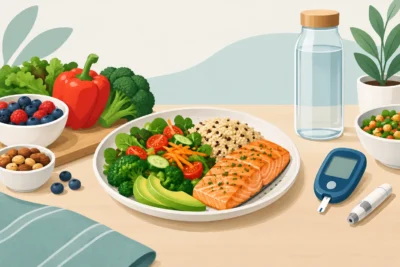
A simple meal structure can remove much of the confusion. At lunch and dinner, aim to fill about half your plate with non-starchy vegetables, one quarter with protein, and one quarter with a high-fiber carbohydrate. Add a small serving of healthy fat if it fits the meal.
Non-starchy vegetables include broccoli, green beans, spinach, cauliflower, peppers, salad greens, zucchini, mushrooms, asparagus, tomatoes, and cabbage. They add volume, nutrients, and fiber without flooding your bloodstream with glucose.
For protein, choose options such as eggs, chicken, turkey, fish, Greek yogurt, cottage cheese, tofu, tempeh, lean beef, or beans. Protein helps you stay full and can soften the blood sugar effect of carbohydrates. It is especially useful at breakfast, when many people are tempted to start the day with toast, cereal, pastries, or sweet coffee drinks.
High-fiber carbohydrates can still have a place on your plate. Good choices include beans, lentils, chickpeas, oats, quinoa, brown rice, sweet potatoes, winter squash, fruit, and whole-grain bread. The amount matters. A large bowl of brown rice can still raise blood sugar significantly, while a smaller serving paired with chicken and roasted vegetables may be much easier to handle.
Healthy fats from avocado, olive oil, nuts, seeds, and natural nut butter can make meals more satisfying. They are helpful, but portions count because fats are calorie-dense. If weight loss is one of your goals, pouring oil freely or eating handfuls of nuts can quietly work against your progress.

Start With Breakfast, Not a Sugar Crash
Breakfast is often where insulin resistance gets challenged first. A bowl of sweet cereal, flavored oatmeal packet, muffin, bagel, or juice can send blood sugar up quickly, then leave you hungry again a few hours later.
Try shifting toward a protein-forward breakfast. Eggs with vegetables and a slice of whole-grain toast, plain Greek yogurt with berries and walnuts, or cottage cheese with sliced tomatoes and avocado are practical choices. If you enjoy oatmeal, make it more balanced with plain rolled oats, chia seeds, cinnamon, berries, and a side of eggs or Greek yogurt.
You do not have to ban fruit. Whole fruit is very different from fruit juice because the fiber slows digestion. Berries, apples, pears, oranges, and peaches are often satisfying choices. Pair fruit with protein or fat, such as an apple with peanut butter or berries with yogurt, rather than eating it alone when you are very hungry.
Choose Carbohydrates More Carefully, Not Fearfully
Carbohydrates raise blood sugar more directly than protein or fat, but that does not make all carbohydrates bad. The key is choosing quality, controlling portions, and avoiding the forms that are easiest to overeat.
Refined carbohydrates have had much of their fiber removed. White bread, regular pasta, crackers, chips, cookies, sugary cereals, pastries, and many snack foods digest quickly. They can create bigger glucose swings and often do little to keep you full.
Instead, look for carbohydrates that come with fiber and nutrients. Beans are one of the best examples. They provide carbohydrate, plant protein, and fiber in one affordable food. Lentil soup, black beans in a taco bowl, or chickpeas in a salad can be far more blood sugar-friendly than a side of fries or a pile of white rice.
Reading labels helps. Focus on total carbohydrates, added sugars, fiber, and serving size. A product can say “whole grain” or “natural” on the front and still contain a surprising amount of added sugar. For many people with insulin resistance, foods with more fiber and little or no added sugar are better everyday choices.
Use Food Order to Your Advantage
The order in which you eat can affect your glucose response. Start your meal with vegetables or a salad, eat protein next, and save starches for later. This small habit may help reduce the size of a blood sugar spike after eating.
For example, if dinner includes salmon, broccoli, and a baked potato, eat the salmon and broccoli first. You do not need to avoid the potato completely, but you may feel better with a moderate portion after the protein and vegetables.
Slow down, too. It takes time for fullness signals to reach your brain. Eating quickly, especially when stressed or distracted, makes it easier to take a second serving before your body has registered the first one. Put your fork down between bites, sit at a table when possible, and give yourself 15 to 20 minutes to finish a meal.
Make Drinks and Snacks Count
Liquid sugar is one of the fastest ways to push blood sugar higher. Regular soda, sweet tea, energy drinks, specialty coffee drinks, sports drinks, and fruit juice can deliver a large sugar load without making you feel full. Water, sparkling water, unsweetened tea, and coffee without sugary syrups are stronger everyday choices.
Snacks are optional, not mandatory. If you are genuinely hungry between meals, choose something that contains protein, fiber, or both. A hard-boiled egg, a small handful of almonds, vegetables with hummus, plain Greek yogurt, cheese with an apple, or tuna on cucumber slices can prevent the desperate hunger that leads to overeating later.
If you are not hungry but feel like snacking, pause and ask what is driving the urge. It may be habit, boredom, stress, thirst, or lack of sleep. Food can be enjoyable, but it should not have to carry the full weight of stress relief.
Plan for Real Life, Including Restaurants and Cravings
The best eating plan is one you can follow on a busy Tuesday, at a family gathering, and when you are tired. Keep a few easy staples available: frozen vegetables, eggs, canned beans, canned salmon or tuna, prewashed salad, rotisserie chicken, plain yogurt, and nuts. Convenience matters because hunger makes fast food and packaged snacks look far more appealing.
At restaurants, look for grilled or roasted protein, vegetables, salads, and simple sides. Ask for sauces and dressings on the side. Consider swapping fries for vegetables or a side salad, but do not treat an occasional restaurant meal as a failure. You can enjoy a favorite food and still make the rest of your day supportive of your goals.
Cravings often become louder when meals are too restrictive. Instead of declaring certain foods forbidden forever, decide how to include them in a controlled way. Have pizza with a large salad and stop at two slices rather than eating it straight from the box. Enjoy dessert after a balanced meal instead of on an empty stomach. These choices are not perfect, but they are realistic and repeatable.
Track Your Personal Response
Two people can eat the same meal and have different blood sugar results. If you use a glucose meter or continuous glucose monitor, your readings can teach you which meals work well for you. Pay attention to fasting glucose, how you feel after meals, hunger levels, energy, and trends over several weeks rather than reacting to one number.
If you take insulin or medications that can lower blood sugar, changing your carbohydrate intake may affect your medication needs. Work with your healthcare professional before making major dietary changes, especially if you have frequent low blood sugar, kidney disease, or other medical conditions.
A 10-minute walk after meals can strengthen the effect of these food changes by helping your muscles use glucose. You do not need an extreme plan to move forward. Start with the next meal: add vegetables, choose a solid source of protein, shrink the refined starch portion, and repeat that choice often enough for your body to benefit.
Important notice: The content of Diabetes Cure Now is solely educational and informational and does not replace the evaluation, diagnosis, or treatment of a doctor or health professional. Before making changes to your diet, exercise, or medication, consult with a qualified professional..
Content reviewed for educational purposes and based on public medical sources.
Sources consulted
- American Diabetes Association (ADA)
- Mayo Clinic
- CDC
- NIH
12 Diabetic Recipes That Keep Meals Balanced
Diabetic Kidney Health Guide for Daily Protection
How to Start Walking With Diabetes Safely
10 Healthy Soups for Diabetics That Satisfy
Do Chia Seeds for Blood Sugar Really Help?

How to Reduce Dawn Phenomenon Naturally
Is Fruit Safe for Diabetes? What to Know
How to Walk After Meals for Better Blood Sugar