
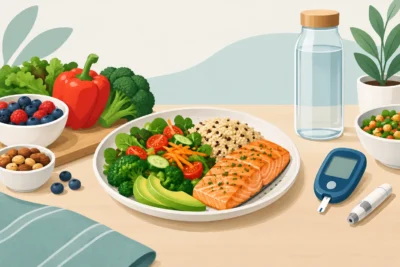
How to Read Food Labels for Diabetes


A package can look healthy at first glance and still send your blood sugar higher than expected. That is why learning how to read food labels for diabetes is one of the most useful skills you can build if you want better control, fewer surprises, and smarter grocery choices.
You do not need to memorize every nutrition term or turn shopping into homework. You just need to know which parts of the label matter most, how they affect blood sugar, and where food companies try to make products sound healthier than they are. Once you understand the pattern, food labels become much easier to decode.
What you\'ll find in this article?
- Why food labels matter so much for blood sugar
- How to read food labels for diabetes without overcomplicating it
- The ingredient list tells you what the front label hides
- Claims on the front of the package can be misleading
- Best label-reading tips for common food categories
- Sodium, fat, and protein still matter
- A simple way to compare two products fast
- How to make food labels work in real life
Why food labels matter so much for blood sugar
For people with Type 2 diabetes or prediabetes, the label is not just about calories. It helps you predict how a food may affect your glucose after a meal, how filling it will be, and whether it supports weight loss or steady energy.
The biggest reason labels matter is that many foods marketed as low-fat, whole grain, natural, or diabetic-friendly still contain more digestible carbohydrate than you might expect. A breakfast bar, flavored yogurt, bottled smoothie, or frozen meal can look reasonable from the front of the package and tell a very different story on the back.
That does not mean packaged foods are off-limits. It means the real decision starts when you turn the package around.

How to read food labels for diabetes without overcomplicating it
Start with the serving size. This is where many people get misled.
If the label says one serving is half a cup, but you usually eat a full cup, every number on the label needs to be doubled. That includes carbs, sugar, calories, and sodium. A food may seem low in carbs until you realize the package contains two or three servings and you are likely to eat all of it.
After serving size, go straight to total carbohydrate. This is usually the most important number for blood sugar management because carbohydrates have the biggest direct effect on glucose levels.
Focus on total carbohydrate first
Total carbohydrate includes sugar, starch, and fiber. Some people look only at sugar, but that can be a mistake. A food does not need to taste sweet to raise blood sugar. Crackers, bread, chips, cereal, rice mixes, and pasta sauces can all be high in carbs even when sugar looks modest.
For many people, total carbohydrate gives the clearest first impression of whether a food fits their goals. The right amount depends on the person, the meal, activity level, medications, and current blood sugar control. That is why one product is not automatically good or bad for everyone.

As a simple rule, compare similar foods side by side. If one tortilla has 28 grams of carbs and another has 14, that difference matters. If one yogurt has 22 grams and another has 9, that matters too.
Then check fiber
Fiber can slow digestion, improve fullness, and reduce how quickly blood sugar rises after eating. In general, higher-fiber foods are more helpful than low-fiber versions of the same product.
This is especially useful when comparing breads, cereals, wraps, snack bars, and crackers. A product with more fiber and fewer total carbs will usually be the better choice for blood sugar support.
Some people calculate net carbs by subtracting fiber from total carbs. That can be helpful in certain cases, but it is not always perfect. Highly processed foods sometimes use added fibers or sugar alcohols to lower net carb numbers on paper while still not being ideal for appetite control or glucose response. If a product is heavily engineered, trust the full picture, not just one marketing number.
Watch added sugars, but do not stop there
The added sugars line helps you spot foods that have sweeteners mixed in during processing. This is useful because added sugar often shows up in places people do not expect, including salad dressings, pasta sauce, oatmeal cups, granola, and nut butters.
Still, added sugar is only one part of the story. A food with little added sugar can still be carb-heavy from starch. That is why total carbohydrate stays at the center of the decision.
The ingredient list tells you what the front label hides
If the nutrition facts panel tells you how much, the ingredient list tells you what the food is actually made of.
Ingredients are listed by weight, from highest to lowest. If the first few ingredients are refined flour, sugar, corn syrup, rice flour, or starches, that food is likely to be fast-digesting and less helpful for blood sugar control.
Look for shorter ingredient lists built around recognizable foods. Oats, chia seeds, almonds, beans, vegetables, eggs, plain yogurt, and whole-food ingredients usually make more sense than a long list full of sweeteners, fillers, and modified starches.
Sugar also goes by many names. You may see cane sugar, brown rice syrup, honey, agave, dextrose, fructose, malt syrup, tapioca syrup, or fruit juice concentrate. A product can claim no high-fructose corn syrup and still be loaded with other sugars.
Claims on the front of the package can be misleading
This is where shoppers often get trapped.
Words like whole grain, multigrain, natural, low fat, gluten-free, and lightly sweetened do not guarantee blood sugar friendliness. Even no sugar added does not always mean low carb. Fruit products often use that phrase while still containing a lot of natural sugar.
Protein claims can also create confusion. A bar with 15 grams of protein sounds helpful, but if it also has 30 grams of carbs and a long ingredient list, it may not be the best option.
The lesson is simple. Ignore the sales pitch on the front until the back label confirms it.
Best label-reading tips for common food categories
Some categories deserve extra attention because they are frequent problem foods.
Bread and wraps can vary widely. One slice of bread may have 10 grams of carbs while another has 22. Look for more fiber, fewer total carbs, and ingredients based on whole foods rather than enriched flour.
Yogurt is another big one. Plain Greek yogurt is often much lower in sugar than flavored versions, even when both are marketed as healthy. If you want sweetness, adding berries or cinnamon yourself gives you more control.
Cereal is often harder than it looks. Even products advertised as heart-healthy can be packed with starch and sugar. Check serving size carefully because the listed portion is often much smaller than what people actually pour into a bowl.
Snack bars are convenient, but many are closer to candy bars with a protein halo. A better bar usually has moderate carbs, meaningful fiber, and a short ingredient list.
Frozen meals can work if you choose carefully. Look for meals with a balance of protein, non-starchy vegetables, and reasonable carb counts. Rice-heavy bowls, pasta dishes, and sweet sauces can push carbs up quickly.
Sodium, fat, and protein still matter
Carbs are the first priority for blood sugar, but they are not the only thing to read.
Protein supports fullness and can help make meals more balanced. A packaged food with some protein is often more satisfying than one built mostly from refined carbs.
Fat matters too, especially the type. Foods with nuts, seeds, avocado, olive oil, or dairy may be more satisfying and gentler on blood sugar than ultra-processed low-fat products that compensate with extra starch or sugar.
Sodium is worth watching if you have high blood pressure, kidney concerns, or eat a lot of packaged foods. Many frozen meals, soups, sauces, and snacks are much higher in sodium than people realize.
This is where trade-offs come in. A product might be low in carbs but high in sodium. Another might have decent ingredients but too much sugar for your current goals. Food labels help you make the best choice available, not chase perfection.
A simple way to compare two products fast
When you are standing in the store, keep it practical. Compare serving size first, then total carbohydrate, then fiber, then ingredients. If needed, glance at protein and sodium.
That quick scan usually tells you enough to make a better decision in under 30 seconds.
Over time, you will start noticing patterns. Foods with fewer refined starches, less added sugar, more fiber, and simpler ingredients tend to support steadier blood sugar and better appetite control. That is good for daily energy, weight management, and long-term metabolic health.
How to make food labels work in real life
The goal is not to become obsessed with every gram. The goal is to get consistent.
Pick a few foods you buy often and start reading those labels closely. Bread, yogurt, cereal, salad dressing, snack bars, and frozen meals are great places to begin. Once you learn which options work for your body, shopping gets easier and faster.
It also helps to pair label reading with your own blood sugar feedback. Two foods with similar carb counts may affect you differently based on portion size, ingredients, your activity level, and what else you eat with them. Your meter or continuous glucose monitor can teach you what the label cannot.
At Diabetes Cure Now, the bigger message is simple: every small choice adds up. Reading labels will not fix everything overnight, but it gives you a real advantage. The more often you choose foods that support stable blood sugar instead of fighting against it, the more control you take back - one grocery trip at a time.
Important notice: The content of Diabetes Cure Now is solely educational and informational and does not replace the evaluation, diagnosis, or treatment of a doctor or health professional. Before making changes to your diet, exercise, or medication, consult with a qualified professional..
Content reviewed for educational purposes and based on public medical sources.
Sources consulted
- American Diabetes Association (ADA)
- Mayo Clinic
- CDC
- NIH
12 Diabetic Recipes That Keep Meals Balanced
Diabetic Kidney Health Guide for Daily Protection

How to Start Walking With Diabetes Safely
10 Healthy Soups for Diabetics That Satisfy
Do Chia Seeds for Blood Sugar Really Help?

How to Reduce Dawn Phenomenon Naturally
Is Fruit Safe for Diabetes? What to Know

How to Walk After Meals for Better Blood Sugar